
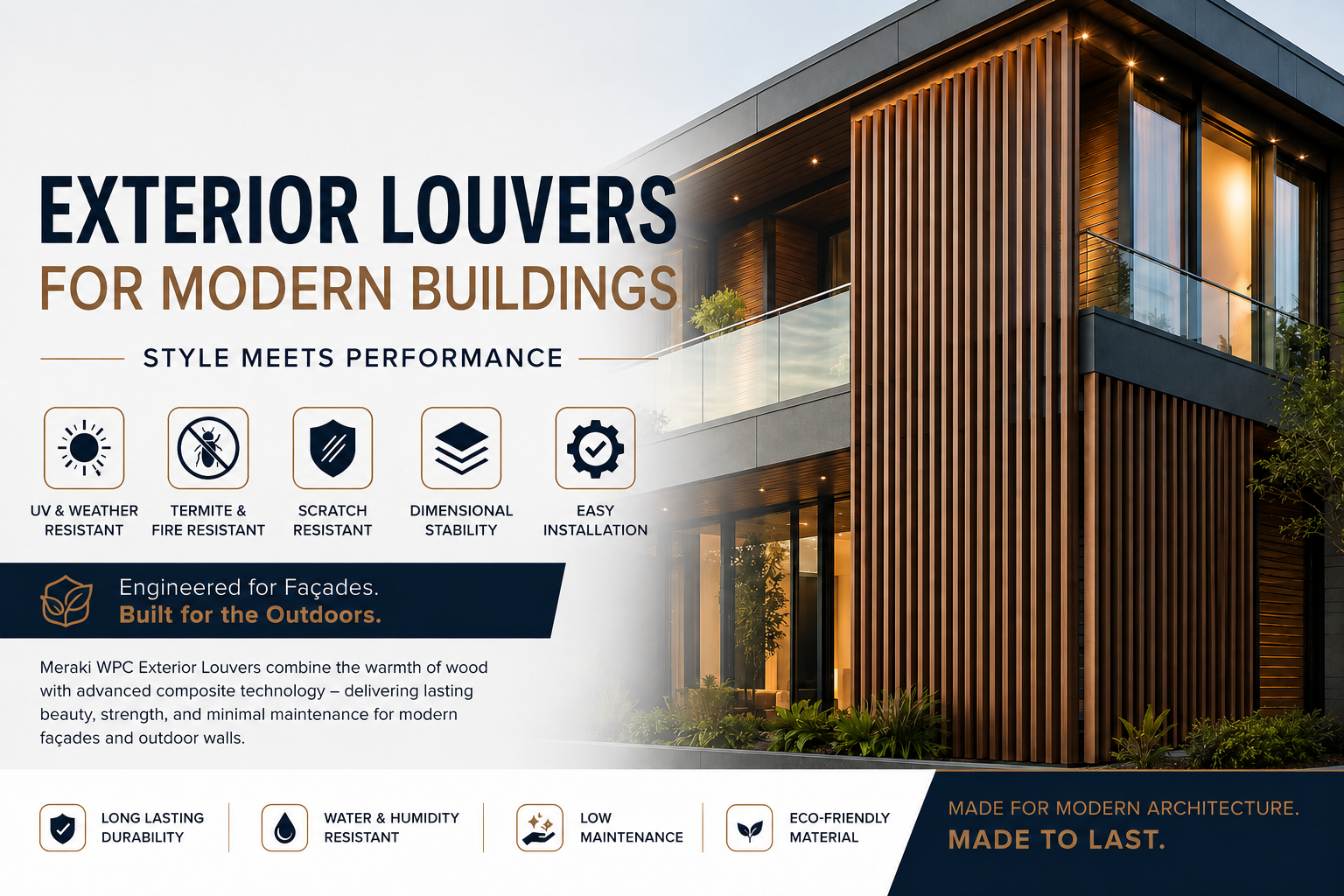
Modern architecture has a new favourite design element and it is hiding in plain sight. Exterior louvers have quietly become one of the most sought-after features in contemporary residential and commercial buildings, and for good reason. They do something rare in design: they look exceptional and work even harder than they look. But what makes a louver truly worth investing in? And how do you choose one built for the long haul?
Exterior louvers are slatted panels installed on building façades, balconies, and outdoor walls. They control light, improve ventilation, add visual depth, and give a building its architectural character. In modern design, they've evolved from purely functional elements into defining aesthetic statements. A well-chosen louver does more than dress up a façade. It manages heat, protects interiors from harsh weather, and adds a layer of privacy all while making the building look considered and crafted.
Here's what most people don't talk about enough: not every louver is built for the outdoors. Exposure to UV rays, rain, humidity, and temperature swings can cause ordinary materials to warp, fade, crack, or attract termites over time. What looks good on day one can become a maintenance headache by year three. This is exactly why material choice matters more in exterior applications than almost anywhere else in a building.
Wood Plastic Composite (WPC) louvers have emerged as the preferred solution for architects and builders who want the warmth of wood without its vulnerabilities.
Meraki WPC Exterior Louvers are engineered specifically for façade and outdoor wall applications. Manufactured using a composite blend of wood fibre, HDPE, and performance additives, they're built to handle everything the outdoors throws at them and still look refined doing it.
• Weather and UV resistance — Meraki WPC Louvers are UV stable, meaning they resist fading and surface degradation even under prolonged sun exposure. Rain, humidity, and temperature fluctuations don't compromise their finish or structure.
• Termite and fire resistance — Unlike natural wood, these louvers are manufactured to resist termite damage and offer fire-resistant performance, making them a safer, longer-lasting choice for both residential and commercial façades.
• Scratch-resistant durability — Façade elements storm a strong weather. From installation to everyday exposure, Meraki WPC Louvers are built with anti-scratch durability that keeps them looking sharp over the long term.
• Dimensional stability — One of the most common complaints with exterior louvers is warping. Meraki's composite technology ensures the louvers maintain their shape and alignment across seasons, reducing the need for adjustments or replacements.
• Installation efficiency — Good design shouldn't be difficult to execute. These louvers are designed for straightforward installation, saving time and labour costs on-site.
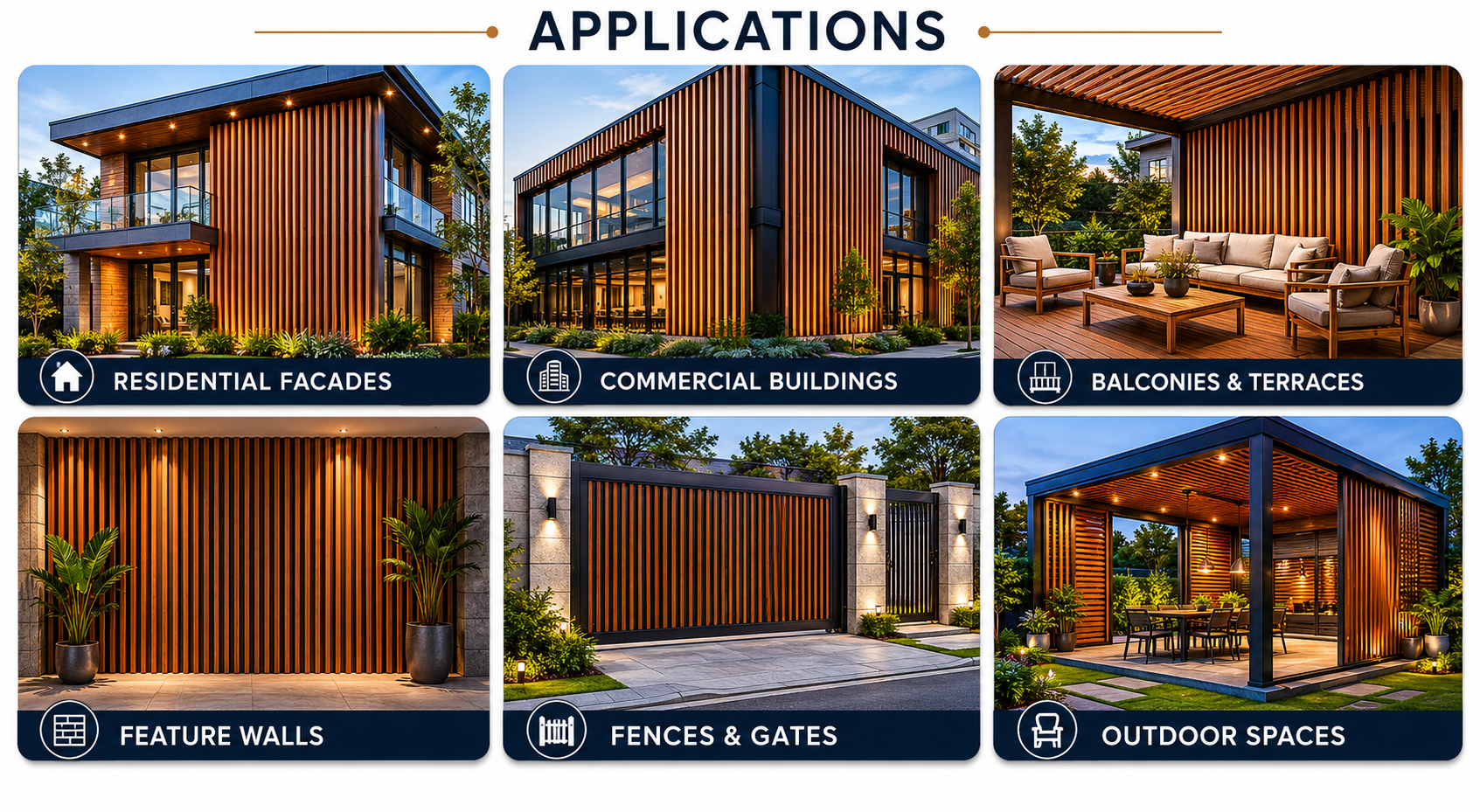
Whether you are designing a premium residence, a commercial complex, or a hospitality project, the façade sets the tone for everything. Meraki Exterior Clads and Louvers bring together structural strength, weather-resistant performance, and architectural elegance developed using high-density composite technologies for façades that are built to last. The result is a surface system that requires minimal maintenance, holds its character across years of exposure, and gives architects and homeowners something increasingly rare: complete confidence in their exterior finish. Modern buildings deserve modern materials. And modern materials should never make you choose between beauty and performance. With Meraki WPC Exterior Louvers, you don't have to.